Drowned in Sound
Music is upstream from politics. Drowned in Sound investigates how the music industry shapes society and how fans, artists, and workers can organise for systemic change. Hosted by Sean Adams, we decode streaming economics, sustainable touring, climate and tech, workers’ rights, and collective solutions with musicians, researchers, and changemakers.
Listen on:









Episodes

Tuesday Aug 12, 2025
Tuesday Aug 12, 2025
Nirvana, TikTok, analogue aesthetics, and virality don't usually go together. Meet the creator who is bucking all the trends.
How do you build genuine community around music in an attention economy designed for extraction? What happens when Nirvana's DIY punk ethics meets TikTok algorithms? Can analog aesthetics and primary source research create alternatives to clickbait culture?
This week, Drowned in Sound founder Sean Adams talks with Royce aka ShoshinBoy - the TikTok creator behind viral music history videos that blend VHS cameras, rotary phones, and deep cultural excavation. From viral Nirvana content (2 million views) to uncovering forgotten Cure folklore, his analog-meets-digital approach reveals how authentic passion can cut through algorithmic noise.
Inspired by DIY punk rock culture, ShoshinBoy developed research methodology that prioritises primary sources and contemporary context over Wikipedia aggregation. His anti-gimmick gimmick - talking through vintage technology while analysing YouTube clips of Arctic Monkeys, The Clash, Pavement and many more - started as platform critique but evolved into genuine community building around shared musical mythology.
The conversation explores creator economy extraction, the death of mysterious rockstars in parasocial media landscapes, and why nostalgia both preserves and destroys cultural memory. Most importantly, it reveals how DIY ethics can survive on corporate platforms when creators prioritise community service over algorithmic optimisation.
Edited by:
Josh Craggs at Dubble Audio
Chapters:
00:00 – Introduction04:30 – Defining journalism08:37 – Everett True's book to TikTok virality11:59 – The analog setup: Anti-gimmick philosophy17:05 – Primary sources vs Wikipedia24:11 – Creator economy critique34:04 – Nostalgia as cultural force42:15 – Alternative funding45:04 – The future of musical mythology in algorithm-driven culture
Quotable Moments:
"I think that like. At its core, I just wanna be genuine and, and like I said, I'm only doing this 'cause it's fun and it's what I'm compelled to do anyways." [24:00]
"I don't think the idea of selling out exists in the year 2023. Acknowledging the idea that just to even pay rent or, or exist as a creative online in the current economy is, is it's so difficult." [26:00]
Continue the Conversation:
Email sean@drownedinsound.org with your thoughts on DIY ethics in the creator economy
Join the discussion in our community forum about preserving musical mythology
Share your experiences building authentic community around music passion
Guest Links:
@shoshinboy on TikTok - Analog music history through VHS and telephone
Shoshin Boy on Instagram
Referenced in Episode:
Everett True – Live Through This: American Rock In The 90s - The story of the grunge phenomenon by Everett True
Careless Talk Costs Lives Magazine - Everett True's magazine mentioned
Meta Label - Yancy Strickler's collective-focused creative platform
Artist Corps - Creative collective experiment mentioned
Simon Reynolds - Retromania - Book on nostalgia culture referenced
About the Host:
Sean Adams is the founder of Drowned in Sound, an independent music publication that has championed underground and independent artists since 2000. Through the DiS podcast, newsletter, and community, Sean explores how to build a fairer, more sustainable music industry while supporting the artists and fans who make it meaningful.
This evergreen episode of the DiS podcast was recorded in 2023 and explores how DIY punk ethics can survive and thrive in platform capitalism, revealing alternative paths for creators who prioritise community building over algorithmic extraction in the attention economy.

Tuesday Aug 05, 2025
Tuesday Aug 05, 2025
How do music journalists spot breakthrough artists before they become household names? What does it take to get leftfield artists like Zola Jesus into mainstream publications like Vogue? How can music journalists build trust that transforms both interviews and careers?
This week, Drowned in Sound founder Sean Adams talks with Ilana Kaplan - the music editor at People Magazine and author of "Nora Ephron at the Movies" (Abrams Books, 2024). Following conversations about discovery and algorithms, this episode explores the craft of music journalism: how experienced writers develop taste, build industry relationships, and create the stories that shape how we discover music.
From researching artists at the Barnes & Noble magazine racks to recognising Billie Eilish's potential at a Mercury Lounge show to creating the viral boygenius Brokeback Mountain-inspired cover stories for Alternative Press, Ilana's career journey reveals the human curation that algorithms can't replicate.
The conversation covers discovery methods, editorial strategy, the changing definition of "alternative music," and why building trust with artists creates better journalism than aggressive questioning.
Edited by:
Josh Craggs at Dubble Audio
Chapters:
00:00 – Introduction04:30 – What journalism means in the misinformation age08:37 – Ilana's career beginnings from SPIN intern to music obsessive11:59 – Spotting stars early: the Billie Eilish gamble that paid off17:05 – Getting Zola Jesus into Vogue: selling leftfield artists to mainstream editors24:11 – What does 'alternative' actually mean?25:07 – boygenius desert shoot: spending your own money for viral covers34:04 – Blacklisted for honest reporting: when PR controls journalism45:04 – The hope in innovation and how models are changing53:22 – Sean's Outro
Key Takeaways:
Discovery requires human curation: The Hype Machine's organic blog aggregation created an outlet for excitement that algorithms can't replicate
Trust transforms journalism: Giving artists space to be heard reveals more than aggressive questioning
Editorial bridges build community: Getting Zola Jesus into Vogue shows how to connect leftfield artists with mainstream audiences
Investment creates lasting impact: The boygenius desert cover succeeded because someone fought for the vision and funded it personally
Taste-making is community service: Early discovery of artists like Billie Eilish demonstrates journalism's role in cultural development
Continue the Conversation:
Email sean@drownedinsound.org with your thoughts on music journalism's craft
Join the discussion in our community forum
Guest Links:
Nora Ephron at the Movies - Ilana's book published October 2024
@lanikaps on Twitter
@lanikaps on Instagram
Ilana on Bluesky
Referenced in Episode:
Defector - Writer-owned sports publication mentioned as model
The Hype Machine - Music blog aggregator that shaped early 2010s discovery
Rob Sheffield at Rolling Stone - The writer who inspired Ilana's career
boygenius in AltPress - The cover feature we discuss
The Future Is Written - Huck Magazine profile mentioned in outro
About the Host:
Sean Adams is the founder of Drowned in Sound, an independent music publication that has championed underground and independent artists since 2000. Through the DiS podcast, newsletter, and community, Sean explores how to build a fairer, more sustainable music industry while supporting the artists and fans who make it meaningful.
This episode was recorded in November 2023 during Ilana's transition between staff and freelance work, capturing insights about journalism craft and industry navigation during a period of significant media industry change.

Tuesday Jul 29, 2025
Tuesday Jul 29, 2025
In this special Q&A episode, DiS founder Sean Adams explores the uncomfortable truths about streaming economics, social media burnout, and why the music industry's success metrics are fundamentally broken.
From debunking the myth that millions of streams equal financial stability to reframing social media as an extension of artistic practice, Sean answers your questions and offers practical wisdom for navigating an industry designed to exploit rather than support creators.
This episode strips away the glossy veneer of streaming success stories to reveal the harsh mathematical reality: an artist with 25 million streams over a decade might earn just £6,000 annually - less than minimum wage, before expenses. Sean explores why massive streaming numbers rarely translate to sustainable live audiences and how platforms like Spotify actively prevent artists from connecting with their own listeners.
Edited by:
Josh Craggs at Dubble Audio
Chapters:
[00:00] Introduction
[01:31] What do you tell an artist that has great music but hates social media?
[09:46] What will streaming look like in five years?
[14:57] Is there still a place for live streaming gigs?
[20:37] Does 25 million Spotify streams pay enough to live on?
[27:07] The difference between building a fanbase and streaming numbers
[32:35] Outro and preview for Part 2
[34:01] Bonus track: Kate Nash on MySpace
Key Takeaways:
How to transform social media from promotional burden into artistic storytelling extension
Recognise the disconnect between streaming numbers and actual audience connection
Focus on platforms that enable direct fan communication rather than vanity metrics
Consider live streaming only for performances designed specifically for digital consumption
Resources Mentioned:
Mood Machine: The Rise of Spotify and the Costs of the Perfect Playlist by Liz Pelly
Benefits' meta-commentary social media approach
Moment House platform for curated live streaming
Bandcamp for Artists - Direct fan communication model
Bandcamp Community Features - Artist-to-fan messaging
Questions Answered:
Sarah Howells (LinkedIn): Advice for great artists who hate social media
Mark Painting (LinkedIn): Will streaming consolidate or fragment in five years?
Paul Gaffigan (Email): Is there still a place for live streaming post-lockdown?
Tony Moss (Email): Breaking down the 25 million streams success myth
Continue the Conversation:Send your questions for future Q&A episodes to sean@drownedinsound.org or find Sean online. What music industry myths need debunking next?
About the Host:Sean Adams is the founder of Drowned in Sound, an independent music publication that has championed underground and independent artists since 2000. Through the DiS podcast, newsletter, and community, Sean explores how to build a fairer, more sustainable music industry while supporting the artists and fans who make it meaningful.
Next Episode Preview:Part two continues with Sean's analysis of the Disarmed Spotify movement - why musicians are pulling their music and fans are abandoning the platform they once trusted.

Tuesday Jul 22, 2025
Tuesday Jul 22, 2025
What if the very thing that makes you feel like an outsider in the music industry could become your greatest business advantage? How do you build something meaningful when you're convinced you're not qualified? And why might starting before you feel "ready" be the secret to creating lasting change?
This week, Sean talks with Isobel Anderson - founder of Girls Twiddling Knobs, one of music tech's most important feminist voices. Following on from the Mary Spender episode about converting online reach into sustainable income, this conversation explores a different path: how small, mission-driven businesses can create industry change without needing massive audiences.
From a PhD in Sonic Arts to over 25 million Spotify streams to building Girls Twiddling Knobs into one of music tech's most important feminist voices, reaching thousands of women through courses, community, and her acclaimed podcast, Isobel's journey proves that feeling like an imposter might actually be your qualification.
In essence, this episode is about turning industry frustrations into business opportunities, why multiple revenue streams are now reality for musicians, and how to value your work when the world expects creativity for free.
Edited by:
Josh Craggs at Dubble Audio
Chapters:
00:00 – Sean's Introduction: Building Your Independent Music Business 02:41 – Isobel Anderson intro: From Singer-Songwriter to Sonic Arts PhD 08:12 – Why Sound Design and Production Details Matter 10:08 – Confronting Misogyny in the Music Industry 20:05 – From Facebook Group to Girls Twiddling Knobs 24:41 – Overcoming Self-Doubt When Learning Something New 30:46 – Why Great Producers Are More Than Technical Experts 33:48 – Valuing Your Work and Putting a Price on Creativity 46:40 – Are Musicians as Vital to Society as Doctors? 49:37 – Balancing Music-Making with Building a Business55:54 – Sean's Outro ReflectionsKey Takeaways:
The 10% Edge: You don't need to be an expert to start teaching others - you just need to be one step ahead of the people you want to help.
Start Before You're Ready: "You are not going to ever be ready to do this" - perfectionism is the enemy of progress.
Mission Before Money: Purpose-driven businesses can be more disruptive than charities because they can make quick decisions and restructure rapidly.
Multiple Revenue Streams Are Reality: Modern music careers require diversified income - it's not a backup plan, it's the plan.
Community Over Confidence: Building safe learning spaces can be more valuable than traditional "confidence training."
Continue the Conversation:
Email sean@drownedinsound.org with your thoughts
Join the discussion: Drowned in Sound Community
Get more music insights: DiS Newsletter
Guest Links:
Girls Twiddling Knobs Podcast
Isobel Anderson - Artist
Referenced in Episode:
The Anchoress - Artist managed by Sean
Girls Twiddling Knobs special episode - The immersive episode Sean references
Delia Derbyshire Day - Celebrating the electronic music pioneer
The Oram Awards - Recognizing women innovating in music and sound technology
About the Host:
Sean Adams is the founder of Drowned in Sound and manages artists including Charlotte Church and The Anchoress. Beyond founding one of the original music blogs, he's worked with BBC 6 Music and co-produced political podcast The Trawl. Through the DiS podcast, he maps the future of music by exploring culture, politics, and the systems shaping how we create and consume music.
Note: This conversation originally took place a couple of years ago but feels more relevant than ever as musicians navigate the realities of building sustainable, independent careers. If this episode sparks any business ideas, we'd love to hear about them in three years' time.
Sunday Jul 13, 2025
Sunday Jul 13, 2025
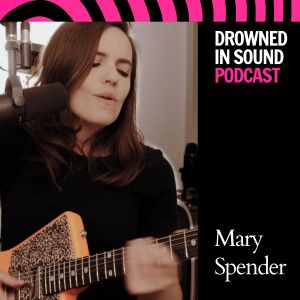
While most music industry coverage focuses on (poly)crisis and collapse, Mary Spender argues we're living through the greatest era for independent artists in history.
But, but but... what about streaming economics, venue closures, and platform dependence? Don't worry, we get into it.
With over 100 million YouTube views, 34,000 newsletter subscribers, and significant album sales achieved before releasing a single track to streaming, Mary demonstrates there are viable alternatives to industry doom-spiralling.
In this conversation, she reveals her strategies for converting YouTube viewers into album buyers, why artists need to think like entrepreneurs, and what she'd build with Spotify's $400 million Joe Rogan budget.
Sean also asks her about her recent video about why artists should embrace YouTube. Speaking of which, you will be able to see clips from this interview over on Drowned in Sound's YouTube: youtube.com/@DrownedinSound
Edited by:
Josh Craggs at Dubble Audio
Timestamps
00:00 Sean's Intro
03:21 What will music be like in 2050?
06:25 Why artists should think like entrepreneurs
12:45 What does the future hold for independent artists?
16:56 The 1000 true fan theory
18:51 Should YouTube be the #1 platform for musicians?
24:36 Researching with an open mind. A rare skillset?
29:45 How to convert an audience from YouTube
34:17 What can the UK government do for music?
36:35 How would Mary spend the $400 million Spotify paid Joe Rogan?
38:39 Is long-form content on the return?
43:29 Sean's Outro
Quotable Moments"Technically it's never been a better time to be a musician than today, even though everyone likes to talk about the heyday. But that was for a very lucky few." "If you don't have the grassroots, you don't have the artists in Wembley Stadium. Like you don't have that trajectory."
Continue the Conversation📧 Email sean@drownedinsound.org with your questions for future episodes🌐 Join the Drowned in Sound Community📰 Subscribe to the Drowned in Sound newsletter
Guest LinksMary Spender's YouTube ChannelMary's website and newsletterThe Dire Straits Documentary on Nebula
Referenced in EpisodeKevin Kelly's "1000 True Fans" essay
About the Host: Sean Adams is the founder of Drowned in Sound (est. 2000), manages artists including Charlotte Church and The Anchoress, and has worked with BBC 6 Music. Through this podcast, he maps the future of music by exploring culture, politics, and the systems shaping how we create and consume music. At its peak, Drowned in Sound had over 3 million readers. Stay tuned for details about its 25th anniversary celebrations.
Saturday Jul 05, 2025
Saturday Jul 05, 2025
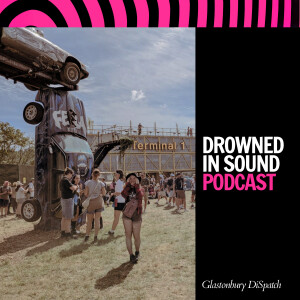
What does it feel like to attend Glastonbury for the first time?
Music journalist Emma Wilkes brings us along for her debut pilgrimage to the UK's landmark musical gathering. She spins us a sonic diary with interviews from Terminal 1 and Laima Layton, along with reactions to some of the politically charged moments of the festival (shouts to Amyl and the Sniffers).
Along the way, there are vox pops with strangers, overlooked corners, and moments that slipped under the mainstream radar…
Edited by:
Josh Craggs at Dubble Audio
Chapters:
00:00 Introduction
01:51 Pre-festival preparation with Emma Wilkes
03:26 Attendees' expectations of Glastonbury 2025
04:22 First impressions and Thursday observations
06:19 Terminal 1 and an interview with Laima Layton
18:32 The sounds of Worthy Farm
19:12 How does the real-life festival compare to the coverage seen previously?
21:45 The political moments of Glastonbury 2025
30:42 The journey home, the Tuesday after, and a summary from a slightly raspy Emma
34:11 Expectations vs. reality with the people of the festival
Mentioned in the episode:
Laima Layton
In Place Of War
GRRRL
Terminal 1
Amyl and the Sniffers
JADE
Seun Kuti
Maruja
Lambrini Girls
Join the conversation: Drowned in Sound Community
Email: sean@drownedinsound.org
Stay updated: Subscribe to DiS newsletter
Sunday Jun 29, 2025
Sunday Jun 29, 2025
How do you build genuine community when algorithms reward viral moments over real connection? What if sustainable music careers start with just five super fans rather than chasing millions of followers?
Drowned in Sound founder & artist manager Sean Adams speaks with Nikki Camilleri - music strategist, Forbes 30 Under 30 honoree, and founder of mana - about the ground-level realities of building a music career in 2025.
From growing up in Malta and navigating geographic disadvantage to working with breakthrough artists like Cat Burns, Nikki breaks down what actually works in today's oversaturated landscape.
This conversation digs deep into authentic community-building versus audience accumulation, the "five super fans" principle that challenges conventional wisdom, and why most artist advice around social media is fundamentally broken.
Plus: Nikki's vision for fixing music industry infrastructure by 2050, including transparency tools and direct fan connection platforms that don't rely on algorithmic gatekeepers.
"You need five super fans to start getting going - that's equal to about 250 passive fans. When you start looking at it that way, it doesn't seem as daunting."
— Nikki Camilleri on why quality beats quantity in fan building
Edited by:
Josh Craggs at Dubble Audio
Episode Timestamps:
00:00 Introduction: Music Reality Check for 2025
02:03 Envisioning Music in 2050: Transparency and Infrastructure
04:34 The Malta Factor: Geographic Disadvantage in Digital Times
08:26 The Resilience Crisis: From "Ready to Fight" to Viral Expectations
16:28 Five Super Fans vs Viral Algorithms: Quality Over Quantity
20:14 Real Community vs Audience: Building Genuine Connection
32:15 Artist Purpose and Identity: The "Horror Electronica" Story
39:21 Fixing the Industry: Where Would You Spend Spotify's Money?
44:48 Key Takeaways: What Actually Works
Mentioned in the episode:
Nikki Camilleri
ROSTR
Royal Society of Arts
Volt.fm
Kat Abu
The Anchoress
Kevin Kelly on 1000 True Fans
Join the conversation: Drowned in Sound Community
Email podcasts@drownedinsound.org
Subscribe to DiS newsletter
Sunday Jun 22, 2025
Sunday Jun 22, 2025
What does it mean to “metabolize” emotion through music? Do wellness tools actually work better when paired with your favourite artist? Why does the music industry treat artists like products and not caregivers?
Drowned in Sound founder Sean Adams is joined by Ariana Alexander-Sefre, co-founder of the mental health app SPOKE, to talk about the future of therapy and how music can play a pivotal role in that. The conversation explores the science behind sound, the emotional toll on musicians, and why music should be taken seriously as a public health tool.
Spoke has worked with over 100 artists, training them in techniques like CBT and mindfulness to embed into lyrics and melodies - and the results are changing lives.
Edited by:
Josh Craggs at Dubble Audio
Episode chapters:
0:00 - 2:45 - Introduction
2:46 - 4:55 What would Ariana hope music to be like in 2050?
4:56 - 7:46 Using music to “metabolize” emotions
7:47 - 11:50 Who are SPOKE and who is Ariana Alexandre-Sefre
11:51 - 13:42 The relationship between music and mental health
13:43 - 20:28 Inside the SPOKE app - embedding music with culture with therapy
20:29 - 31:18 Why the music industry needs a fresh perspective on artist value
31:19 - 37:08 The science behind functional music and mindfulness
38:09 - 40:04 The real-world impact of therapy delivered through music
40:05 - 48:08 Can artists become a recognised part of healthcare?
48:09 - 54:13 - Closing thoughts from Sean
Mentioned in the episode:
Music Minds Matter
Can Music Make You Sick? (Sally Anne Gross)
Mood Machine: The Rise of Spotify and the Cost of the Perfect Playlist (Liz Pelly)
Endel
Join the conversation: Drowned in Sound Community
Email: sean@drownedinsound.org
Subscribe to DiS newsletter
Saturday Apr 12, 2025
Saturday Apr 12, 2025
What does a melting glacier sound like? Can a rainforest sing? And what happens when the last bird of its species hears a recording and tries to reply?In this special live edition of the Drowned in Sound Podcast, recorded at Tallinn Music Week, host Sean Adams moderates a powerful conversation on music, ecology, and collective action. Joined by artists and innovators from the EarthSonic project, the panel explores how field recordings, plant biofeedback, and immersive sound can shift our understanding of the planet — and why that emotional shift matters.From Brazil’s disappearing biodiversity to sound fossils in the Swiss Alps, this episode weaves together music, activism, and indigenous wisdom in an urgent yet hopeful conversation about art’s role in averting climate collapse.Plus Ruth from In Place of War reveals their new project with Bicep in Greenland that launches in summer 2025.Featured Guests & Projects:Natural Symphony (Joey Dean)Ludwig BergerIn Place of War / EarthSonic (Ruth Daniel)Martyn Ware (Heaven 17 / Human League)Episode Highlights & Timestamps:03:00 – Ruth Daniel on the origins of In Place of War and EarthSonic06:00 – Ludwig Berger: Listening to melting glaciers through hydrophones11:00 – Martyn Ware (Heaven 17/The Human League) on sonifying endangered species and synthetic forests17:00 – Natural Symphony: Collaborating with plants and reforesting the Amazon27:00 – The power of sound to bridge disconnection and inspire action33:00 – Building cultural change through art and emotional resonance39:00 – Sound healing, deep listening, and making the unseen audible45:00 – What capitalism doesn’t want us to feel — and why art matters52:00 – Indigenous wisdom, urban detachment, and finding your own tree58:00 – Hopeful projects, collective agency, and calling in the music industryMentioned in the Episode:"The Last Scream" new releaseCrying Glacier movieEarthSonic panel replay via the TMW.EE websiteJoin the Conversation:Drowned in Sound CommunityEmail Sean → sean@drownedinsound.orgFollow Sean on BlueskySubscribe to the DiS Newsletter
Saturday Apr 12, 2025
Saturday Apr 12, 2025
What did the future sound like when the synthesizer first arrived? What does it feel like now, with AI looming and immersive audio spaces on the rise?In this special episode of the Drowned in Sound Podcast, recorded at Tallinn Music Week, Sean Adams speaks with Martyn Ware — founder of The Human League and Heaven 17, producer for acts ranging from Tina Turner to Erasure, and creator of some of the UK’s most ambitious sound installations.This is a conversation about optimism and dystopia, about punk and purpose, and about how DIY culture in Sheffield shaped a career that’s still future-facing today.Martyn also reflects on his podcast Electronically Yours, the legacy of sound, and how creative freedom can reshape confidence, community, and cultural memory. Timestamps & Topics:01:32 – Synths, Sheffield, and starting out07:00 – Curiosity and creative confidence10:00 – From charts to immersive installations14:30 – Podcasting and preserving legacy20:00 – What would a Martyn Ware bar sound like?25:00 – Optimism, memory, and what comes next Further Listening & Resources:🎙️ Electronically Yours podcast🔊 Illustrious Company (immersive audio)🧠 Sounds of Our Shores installationStay Connected:🗣 Drowned in Sound Community📩 Email Sean → sean@drownedinsound.org🔵 Follow Sean on Bluesky📰 Subscribe to the DiS NewsletterAbout the Guest:Martyn Ware is a pioneering British musician, producer, and sound artist. As a founding member of The Human League and Heaven 17, and co-founder of British Electric Foundation, he helped define the sound of synth-pop while pushing boundaries in spatial audio, immersive installations, and political music-making. He also hosts the acclaimed podcast Electronically Yours.About the Host:Sean Adams turned his passion for music into Drowned in Sound, a UK-based music platform that launched in 2000. He also manages artists like Charlotte Church and The Anchoress, and works across strategic communications in the music and creative sectors.